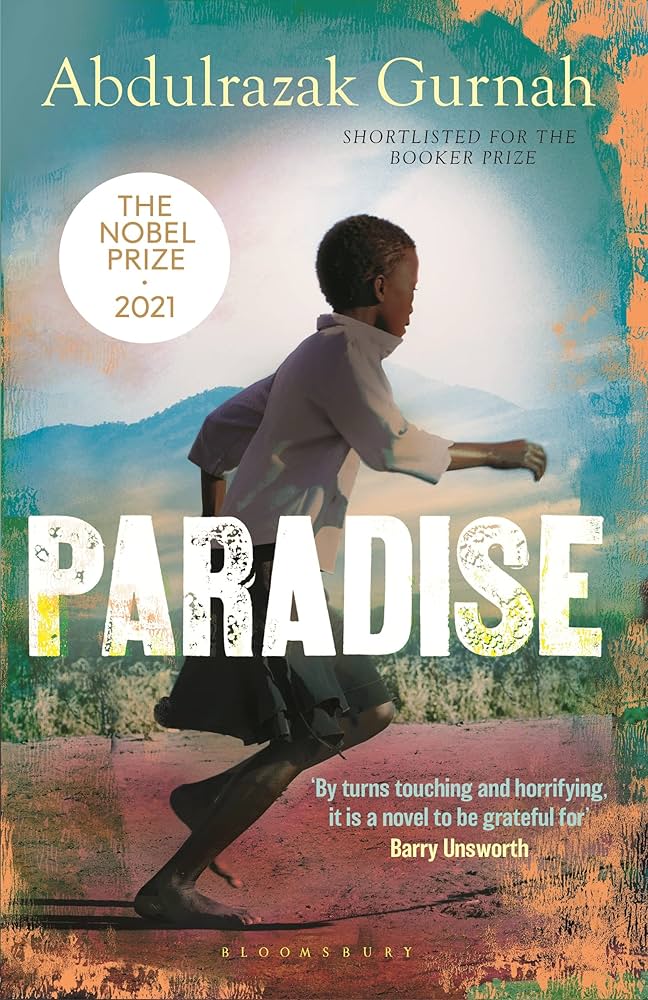
In this fourth novel by Nobel Prize recipient Abdulrazak Gurnah, the author tells a coming of age story of Yusuf. It is in the first decade of the twentieth century in Zanzibar, east Africa and Yusuf is given up by his parents to repay a debt owed to an Arab merchant named Aziz . Simultaneously, Gurnah offers the equivalent of a crystal clear black and white photograph I associate with the era.
In Gurna’s picture of east Africa, I can hear the maddening drone of mosquitos swarming over a sleeping night on a sultry night. I feel myself sitting amongst a group of story-telling men at twilight in the days before electricity and electronics. And I am struck by the cultural diversity of Africa as Arab traders bring caravans of goods to Africa’s interiors. Muslims meet animists and ridicule one another, but trade nonetheless. Indians dominate coastal commerce. Hovering just outside the central action, British and German colonists are lining up to extract Africa’s human and natural resources. As we watch Yusuf grow from a small shop boy into a young man it is a pleasure to observe a de-Europeanized vision of Africa’s melange of cultures.